How Steel Garden Edging Prevents Grass Runners in Garden Beds and Pathways

Steel garden edging is one of the most effective ways to prevent grass runners from creeping into garden beds and pathways. Quality garden edging creates a defined boundary that lawn runners struggle to cross when installed correctly. When installed correctly, garden edging creates a strong physical barrier that keeps lawn growth contained and protects clean boundaries around your landscape. A properly installed steel edge forms a strong physical barrier that stops grass runners from spreading beyond your lawn.
Instead of constantly trimming or pulling out invading grass, the goal is to block it at the boundary. When the edge is installed at the right depth and secured firmly, it keeps grass where it belongs and protects clean, defined garden lines.
Key points
- Steel garden edging creates a physical barrier that blocks grass runners
- Correct installation depth is critical for long-term control
- Continuous, gap-free edges prevent repeat problems
- A properly installed edge reduces ongoing maintenance
Block the runner, stop the spread
Grass runners move sideways along or just under the soil surface. If there is a gap, they grow through it. If edging is too shallow, they go underneath it.
The solution is simple. Install a solid steel barrier that reaches below ground level and runs continuously along the lawn edge.
Why steel garden edging works to prevent grass runners
Steel edging is strong and stable once installed. It does not shift easily and holds a clear boundary between lawn and garden bed.
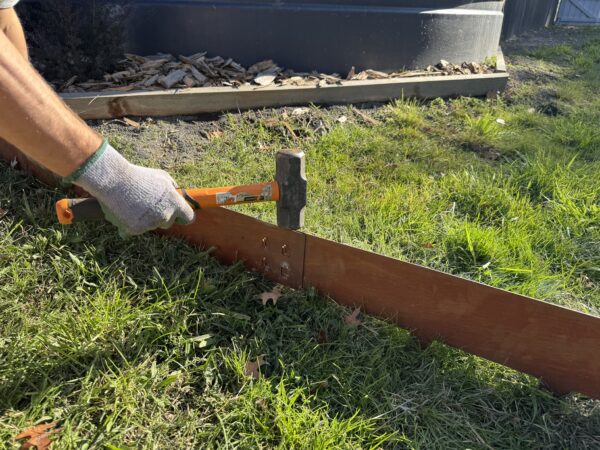
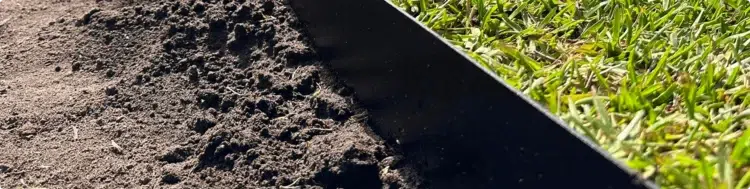
When installed with approximately 30 to 35mm of the steel edge below ground level, along with the fixing spikes driven firmly into the soil, an underground barrier is formed. This setup will stop at least 80 per cent of grass runners from pushing underneath the edge.
The small section below the surface is what makes the difference. It blocks the most common underground runner movement while the visible edge keeps lines neat and defined.
Installation tips that matter
1. Install with the correct depth
Make sure that around 30 to 35mm of the steel edging sits below the soil level. This helps prevent runners from travelling underneath. Secure the spikes fully so the edge does not move over time.
2. Keep the edge continuous
Joins and corners should fit tightly together. Even small gaps allow grass through. Treat the entire border as one continuous barrier.
3. Control soil and mulch levels
If soil or mulch builds up higher than the edging, runners can travel over the top. Keep garden beds slightly lower than the top of the edge.
4. Secure pathway edges
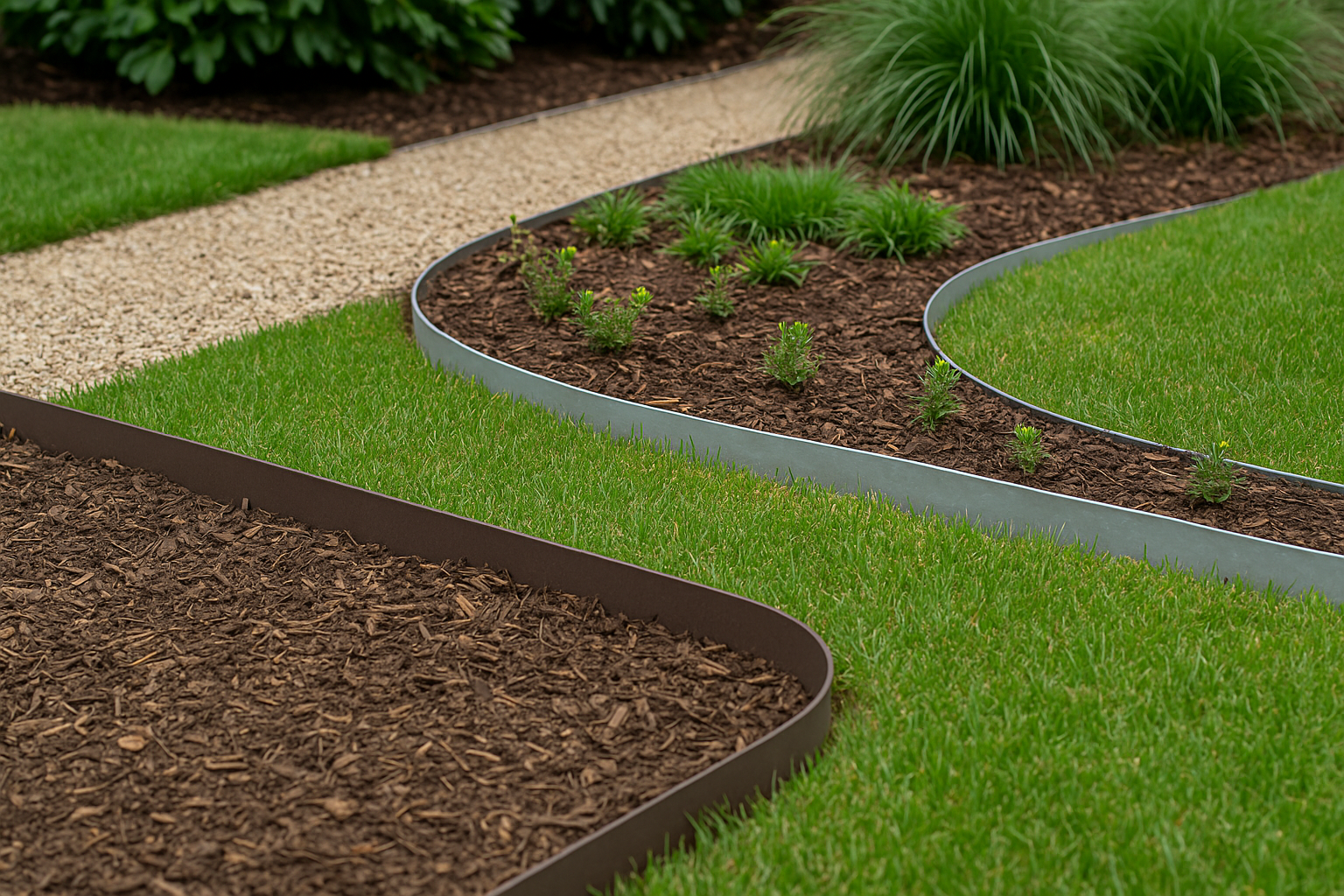
Where lawn meets paving, steel edging helps prevent grass from creeping underneath and emerging between pavers. A compacted base and firm edge reduce entry points.
Common reasons grass returns
- Edging installed too shallow
- Gaps at joins or corners
- Soil levels are rising over time
- Loose or unsupported path edges
Correcting these issues delivers long-term results.
Simple, long-term control for homeowners
Installing steel garden edging is achievable for most homeowners with basic tools and careful preparation. Mark out your line, dig a neat trench, set the depth correctly, and secure each section firmly.
Gardening Direct supplies steel garden edging across Australia, with nationwide delivery and local pickup available in Victoria.
If you need installation support in Melbourne, you can request straightforward advice or a no-obligation quote here.
DIY checklist for preventing grass runners
- Mark out your edging line clearly
- Install steel edging with 30 to 35mm below ground level
- Drive spikes in firmly so the edge does not move
- Ensure joins are tight with no gaps
- Keep soil and mulch below the top of the edging
- Check edges each season for buildup or movement
Frequently asked questions
1. Is steel garden edging effective for preventing grass runners?
Yes. When installed correctly with part of the edge below ground and spikes secured, steel edging forms a strong barrier that blocks most runners from spreading.
2. How much of the edging should sit below ground?
Around 30 to 35mm below soil level is recommended to create an underground barrier that stops the majority of runner growth.
3. Can grass still grow over the top of the edging?
It can if soil or mulch builds up too high. Keeping garden bed levels slightly lower than the top of the edge maintains the barrier.
4. Does steel edging help stop grass creeping into pathways?
Yes. When installed along path edges with a compacted base, it reduces the chance of runners travelling underneath paving and emerging between joints.
5. Do you ship steel garden edging Australia-wide?
Yes. Gardening Direct supplies steel garden edging across Australia, with delivery available nationwide and local pickup in Victoria.