

Steel Garden Edging vs Timber: Which Lasts Longer?

Timber edging looks great on day one. A few wet winters later, it’s often a different story: soft spots, split boards, and sections leaning into the lawn. So which lasts longer?
In our experience at Gardening Direct Australia, steel garden edging outlasts timber by years, because it doesn’t rot, warp, or attract termites. With over 10 years in the landscaping industry and a Thomastown warehouse stocked with steel and Corten edging, here’s how we see the two compare.
Key Points
- Lower-durability timber can break down in under 5 years once it’s in the ground
- Steel doesn’t rot, warp, or give termites anything to eat
- Our corten forms a protective patina, while our galvanised edging relies on zinc and a black powder coat
- Fewer replacements usually make steel the better-value choice over time
How Long Does Timber Garden Edging Last?
It comes down to the timber you choose. Timber in Australia is rated by natural durability class, and the lower classes can break down in under 5 years when they’re in contact with soil. Even tough hardwoods have a softer outer layer (the sapwood) that rots far sooner than the heart of the tree. Treated pine helps, but only if it’s rated for in-ground use.
Edging is one of the hardest jobs you can give timber. It sits in damp soil all year, gets clipped by mowers and whipper snippers, and moves as the ground swells and shrinks. Plenty of Melbourne gardens sit on reactive clay, which expands when wet and contracts when dry. Each cycle works the boards a little looser.
Then there are termites. Timber buried in moist soil is exactly what they look for, and a rotting border can draw them closer to your home.

How Long Does Steel Garden Edging Last?
Steel garden edging doesn’t give fungi or termites anything to work with, so the only thing to manage is corrosion. We stock two finishes, and each handles that in its own way.
Galvanised and Powder-Coated Steel
Galvanised steel is coated in zinc, which protects the steel underneath. Our galvanised steel edging adds a black powder coat over the top for a second layer of protection and a clean, modern finish. One customer who installed it told us there were no scratches, chips, or signs of rust after rain, and that the five 200 mm lengths he ordered weighed about 20 kg. That weight is solid steel you won’t be replacing any time soon.
Corten Steel Garden Edging
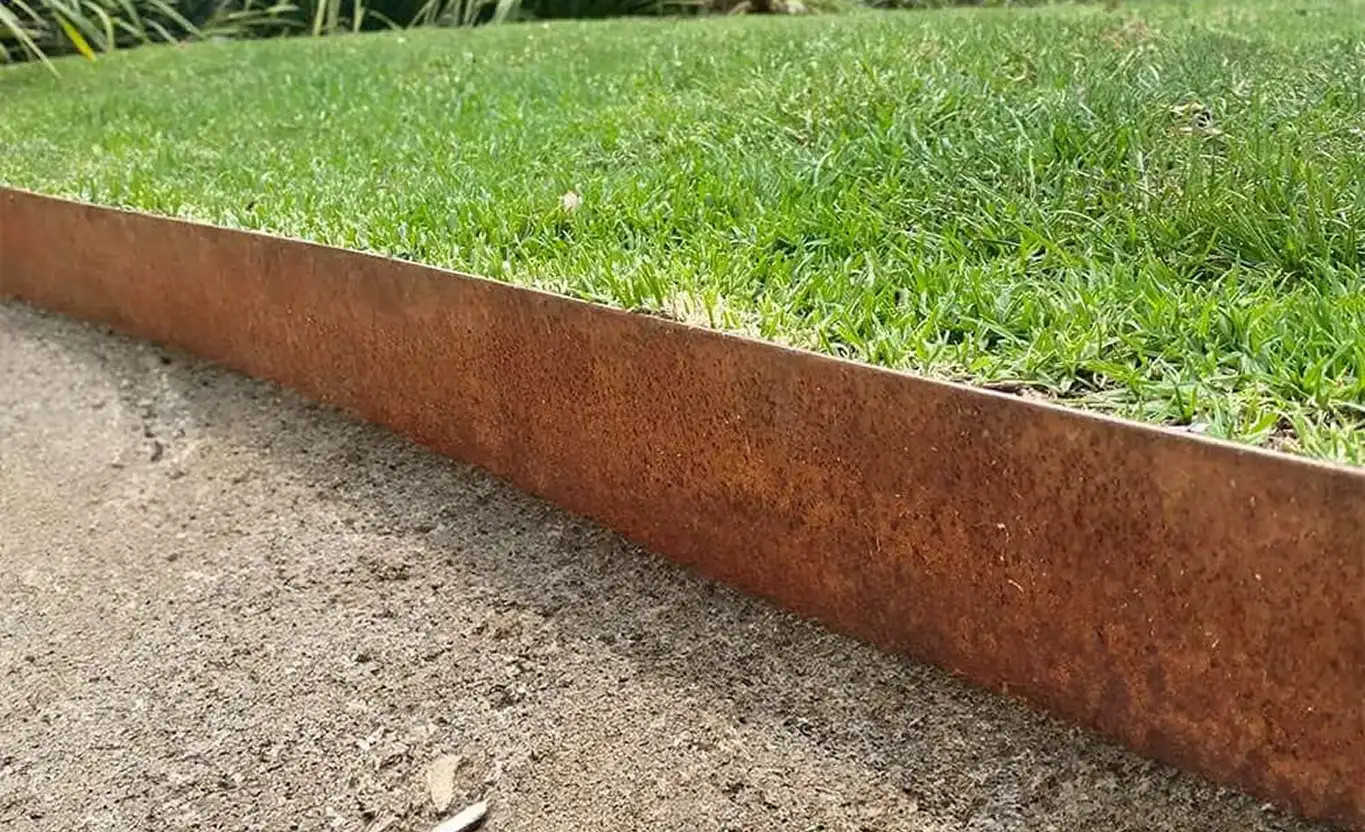
Corten (also called weathering steel) works differently. As it goes through wet and dry cycles, it forms a tight rust layer called a patina, which slows further corrosion. There’s no paint or sealant to worry about. Our corten leaves the warehouse pre-rusted, so it looks weathered from the day you install it, and the patina keeps maturing over six months to two years.
One honest note: the patina forms where the steel can dry out, so the section below ground rusts slowly instead. That’s where thickness counts, and our Corten steel garden edging is made from solid 2.0 mm steel.
Steel vs Timber at a Glance
Timber edging
- Lower-class timber can break down in under 5 years in the ground
- A food source for termites
- Tricky to curve, as boards need cutting
- Needs re-staking and replacing rotten sections
- Installs with stakes, screws and cutting to length
Gardening Direct steel edging
- Long-lasting, with no rot
- Gives termites nothing to eat
- Bends by hand around curves
- Only needs an occasional check that sections are seated
- Interlocking lengths with integrated spikes, in heights from 75 to 200 mm
- Matte black or warm Corten finish
Which Is Better Value Over Time?
Timber can look cheaper at the checkout, but the real cost shows up later. Every time a border rots out, you’re paying for materials and labour all over again.
With steel, most gardens only need to do the job once. Our edging comes in 1100 mm lengths, giving 1 metre of usable edge once you allow for the 100 mm overlap, so measuring up is simple. Each length clips into the next, with no separate pins or joiners to buy.
Our customers notice the difference. One told us our steel edging ended up “much cheaper and less work to install than timber edging.” Another used a timber block to bend neat 90-degree corners, then picked up a second batch from our warehouse to finish the job.
Is Timber Ever the Right Choice?
Sometimes. A highly durable hardwood sleeper can suit a chunky raised bed or a rustic design, and some gardeners simply love the look of wood. If you go that way, choose a durable species or timber treated for in-ground use.
If it’s the warm, natural feel you’re after, we often suggest corten instead. Its orange-brown patina sits beautifully next to timber decks, stone and native plants, without the rot.
Ready to swap timber for something that lasts?
Browse our steel and corten range, pick up from Thomastown or have it delivered Australia-wide. Not sure which height or finish suits your garden?
Get in touch with the Gardening Direct team, and we’ll help you choose. Prefer to leave the lifting to us?
We also supply and install edging across Melbourne.
Frequently Asked Questions
1. Does treated pine last longer than untreated timber as edging?
Yes, as long as it’s treated for ground contact. Untreated pine has low natural durability and can break down within a few years in soil. Check the label before buying, as not all treated pine is rated for in-ground use.
2. Will steel edging rust through in Melbourne’s wet winters?
Not quickly. Our galvanised edging is protected by its zinc and powder coat layers, while our corten forms its own protective patina above ground. Rain actually helps corten develop, as long as the steel can dry out between showers.
3. Do termites eat timber garden edging?
They can. Termites feed on timber, especially when it’s damp and touching soil. Steel isn’t a food source, so it takes that risk off the table.
4. Can steel garden edging bend into curves?
Yes. Our 2.0 mm edging can be shaped by hand around curved beds, circles and winding paths without kinking. Customers often bend tighter corners over a timber block or a car tyre.
5. Can I install steel edging myself?
Absolutely. Each length clips into the next, and integrated spikes let you push or gently tap it into compacted soil. All you need is a tape measure, a rubber mallet, and a bit of patience, and our team is always happy to help if you get stuck.

